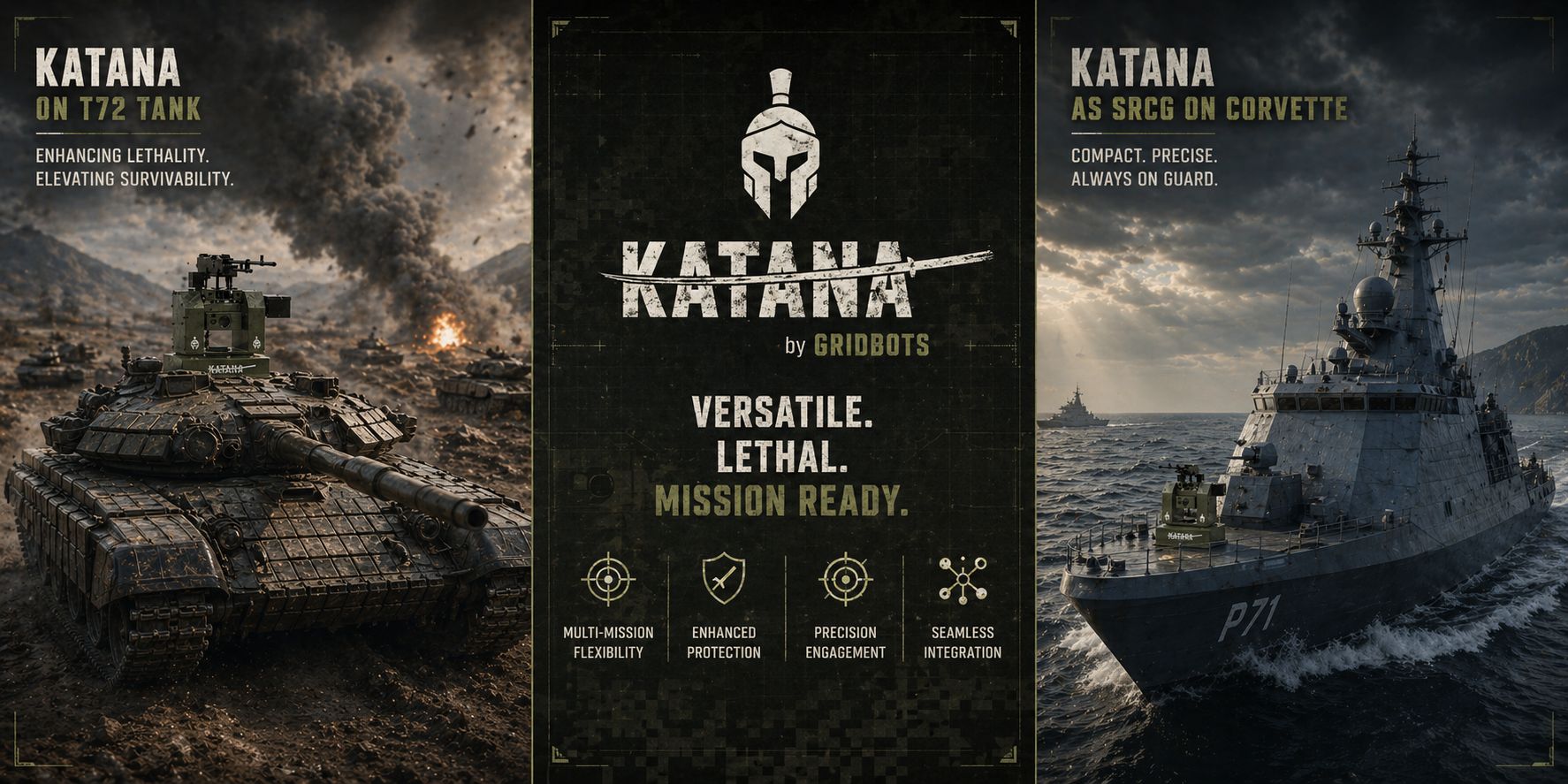
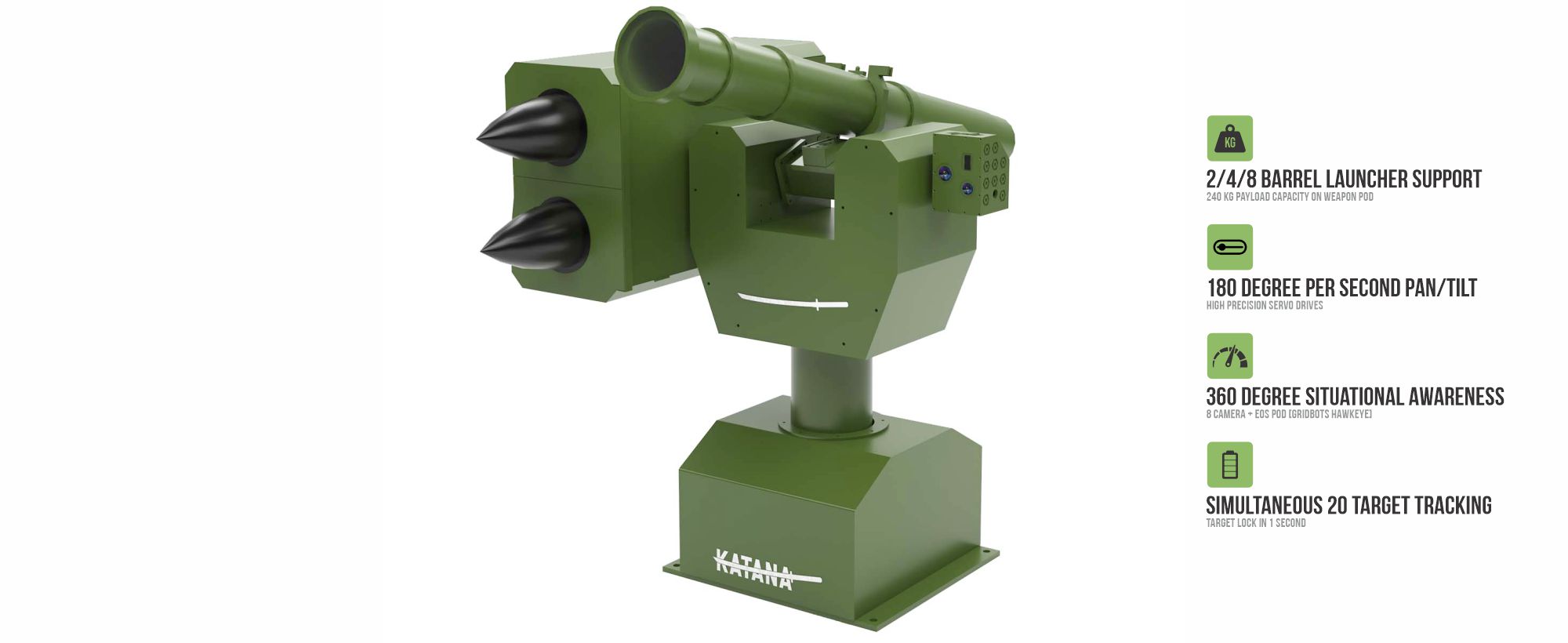
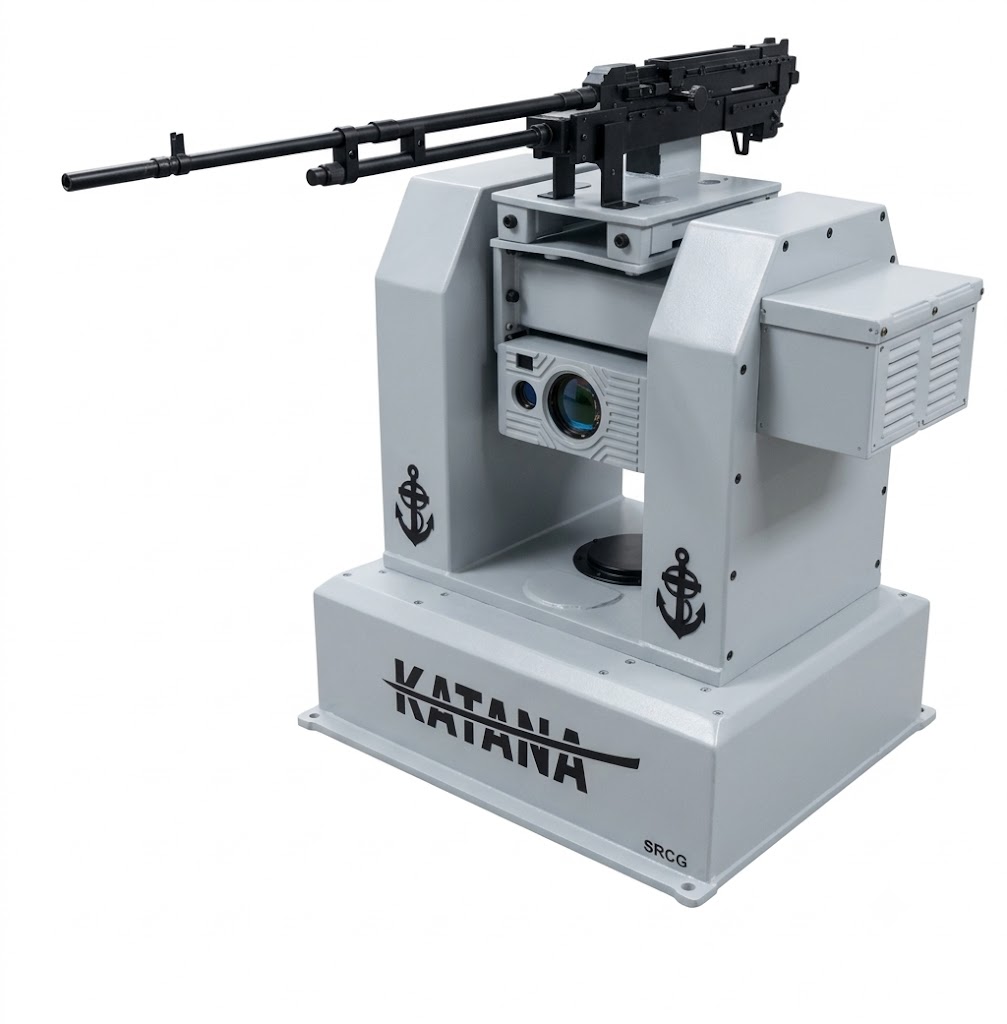
Gridbots KATANA RCWS — three versions: Ground Defense for bunkers and posts, Air Defense anti drone weapon station, and SRCG naval stabilised remote control gun


KATANA — AI-Enabled RCWS in Three Versions

Ground Defense (Bunkers & Posts) | Air Defense (Anti-Drone) | SRCG (Naval Ships) | Made in India


Gridbots KATANA is a state-of-the-art remote control weapon station (RCWS) capable of tracking more than 20 simultaneous aerial and ground targets and locking on to any target within a second for engagement. Designed and manufactured in India, the KATANA RCWS is offered in three purpose-built versions — KATANA Ground Defense for bunkers and posts, KATANA Air Defense for anti-drone roles, and KATANA SRCG (Stabilised Remote Control Gun) for naval ships.

The Ground Defense version is the fixed-installation and post variant, hardened for LOC bunkers, border outposts and high-altitude posts. It is the only KATANA version fitted with an integral ATGM effector, giving it a dedicated anti-armour and anti-bunker capability alongside its machine-gun and grenade-launcher payloads.

The Air Defense version is a fully integrated anti drone weapon station that combines AESA radar cueing, EO/IR sensor fusion, and onboard deep-learning target classification to detect, track and neutralise Class I and Class II UAVs, FPV loitering munitions and low-altitude rotary-wing threats using kinetic and airburst effectors.

The SRCG version is a fully marinised, gyro-stabilised remote control gun for naval ships — auto-locking, tracking and engaging fast attack boats (FIAC), suicide skiffs, sea-skimming drones and surface UAVs in high sea states. All three versions share the common GB-KATANA-MK1 chassis, AI compute backbone and sensor architecture, supporting 360° azimuth, 180° elevation, 10 µRad pointing precision, 180°/sec slew rates and 99.9% locking accuracy.

20+
Simultaneous Targets
99.9%
Locking Accuracy
360°
Azimuth Coverage
10 km
EO/IR Detect Range
10 µRad
Pointing Precision
<1 s
Lock-On Time

Three Versions

One RCWS Platform — Ground Defense, Air Defense & SRCG (Naval)


The Gridbots KATANA is a single, modular remote control weapon station configured into three purpose-built versions. Each version reuses the common KATANA RCWS chassis, AI compute and sensor backbone — only the effector pack, fire-control profile and host-platform interface change. This commonality drives down lifecycle cost, simplifies operator training, and gives armed forces a single RCWS family that scales from a hardened bunker to an anti-drone post to a stabilised remote control gun on a warship. Note that ATGM firing is exclusive to the Ground Defense version — the Air Defense and SRCG versions are gun and effector based only.


01
KATANA — Ground Defense
For Bunkers & Posts | KATANA-GND

The Ground Defense KATANA (KATANA-GND) is the fixed-installation and post variant of the remote control weapon station, engineered for hardened bunkers, border outposts and high-altitude posts. Purpose-built for LOC bunkers, Siachen-class posts at 16,000 ft+ and forward perimeter towers, this RCWS delivers behind-armour engagement of infantry, light vehicles, hardened targets and infiltration drones in the most punishing terrain the Indian sub-continent presents. It is the only KATANA version to carry a dedicated ATGM effector, letting a static post defeat armour, bunkers and other hardened point targets.

Host Platforms
LOC Post HAOP Bunker HESCO Bunker High-Altitude Post Border Outpost Perimeter Tower MRAP / ICV Fixed Mount
Mission Profile
  • Hardened bunker mount for high-altitude posts at 16,000 ft+ (cold-weather kit)
  • Counter-sniper, counter-ATGM-team and counter-infiltration role on the LOC
  • Anti-armour / anti-bunker engagement via integral ATGM — ground-defense exclusive
  • 360° perimeter overwatch for forward operating bases and border posts
  • Fully behind-armour operation from within the bunker crew compartment
Configured Effectors
  • 12.7 mm NSV / M2HB heavy machine gun (primary)
  • 7.62 mm PKT coaxial option
  • 30 mm AGS-30 automatic grenade launcher (twin-mount option)
  • ATGM launcher (Spike-ER / Konkurs / Nag) — GROUND DEFENSE EXCLUSIVE
  • Smoke grenade dischargers ×8 for self-protection
Version-Specific Features
  • Cold-weather kit rated to −40 °C for Siachen / Ladakh deployment
  • STANAG 4569 Level 4 ballistic shielding around exposed components
  • NBC-decontamination compatible
  • EMI hardening for collocation with post radios and ECM
  • Hunter-killer integration with post / vehicle FCS (BMS Link)
4.0 km
ATGM Range
2.0 km
Gun Range
−40 °C
Cold Limit
02
KATANA — Air Defense
For Anti-Drone Roles | KATANA-AAD

The Air Defense KATANA — designated KATANA-AAD — is the dedicated anti drone weapon station. It is engineered to defeat the full Class I and Class II UAV threat spectrum, from commercial quadcopters and FPV kamikaze drones to tactical recce platforms and small loitering munitions. Tightly integrated with the GB-Sentinel C-UAS suite, this version turns the KATANA RCWS into the hard-kill layer of a layered air-defence doctrine — the last 4 km of the kill chain. It is a gun and airburst effector based version and does not carry an ATGM.

Host Platforms
Fixed Tower HESCO Bunker Air Base Perimeter Refinery / Plant Convoy Vehicle VVIP Detail Forward Operating Base
Mission Profile
  • Hard-kill of Class I micro / mini UAVs (quadcopters, FPV loiterers)
  • Engagement of Class II tactical drones and small loitering munitions
  • Counter-swarm engagement with autonomous target queueing
  • Low-altitude rotary-wing intercept (NOE helicopter recce)
  • Critical-infrastructure overhead protection (airbases, refineries, dams)
Configured Effectors
  • 30 mm Programmable Airburst (PABM) — primary anti-drone effector
  • 12.7 mm with anti-UAV airburst rounds
  • Octa-pod guided micro-effector launcher (8× smart munitions)
  • 7.62 mm anti-swarm suppression option — gun / airburst only, no ATGM
Version-Specific Features
  • AESA radar cue (S/X-band) — 10 km against 0.01 m² RCS targets
  • Acoustic Fourier array — 360° passive UAV bearing
  • Gated-light EO/IR camera for low-RCS small UAV detection
  • Lead-angle predictor with airburst standoff calculation
  • Slew-to-cue handover < 0.4 seconds
  • Network-shared track files between adjacent KATANA-AAD nodes
  • IFF integration to prevent fratricide on friendly UAS
4.0 km
Hard-Kill Range
10 km
Detect (AESA)
<1.5 s
Cue → Fire
03
KATANA — SRCG
For Naval Ships | Stabilised Remote Control Gun

The KATANA SRCG (Stabilised Remote Control Gun) — designated KATANA-SRCG — is a fully marinised, gyro-stabilised remote control gun for blue-water and littoral operations. Engineered for OPVs, fast attack craft, ICGS interceptor boats and merchant escort details, this version of the KATANA RCWS delivers auto-locking, tracking and annihilation of fast attack boats (FIAC), suicide skiffs, sea-skimming drones and surface UAVs in high-clutter sea states. Saltwater corrosion-proofed, ship-motion compensated, and link-up ready with the vessel's CMS. As an SRCG it is gun and effector based only — no ATGM.

Host Platforms
OPV Fast Attack Craft ICGS Interceptor Boat Patrol Vessel Landing Craft Merchant Escort Coastal Tower
Mission Profile
  • Auto-lock, track and annihilate enemy boats (FIAC) and suicide skiffs
  • Anti-USV (unmanned surface vessel) engagement against sea-skimming drones
  • Anti-piracy and anti-smuggling boarding-team support
  • Anti-swarm boat defence with autonomous target queue
  • Low-altitude anti-drone defence over the ship's flight deck
  • Harbour and port-perimeter sentry from coastal towers
Configured Effectors
  • 12.7 mm marinised heavy machine gun (primary)
  • 30 mm naval cannon option for OPV-class platforms
  • 40 mm AGL airburst option for anti-USV / anti-skiff
  • Fast-reload twin barrel option for sustained anti-swarm fire — gun-only SRCG, no ATGM
Version-Specific Features
  • Full marinisation — salt fog & humidity per MIL-STD-810H
  • Gyro stabilisation compensates for pitch / roll / yaw at Sea State 5
  • Sea-clutter rejection algorithms in the AI tracker
  • Wave-top dwell discrimination — separates skimming USV from sea spray
  • CMS / Link-Y integration with naval combat management system
  • Standalone navigation radar feed for over-horizon cueing
  • Dark Silicon Imager for low-light littoral engagement
SS-5
Sea State
2.5 km
Anti-FIAC Range
99.9%
Auto-Lock Acc.

Versions At-A-Glance


Parameter 01 — Ground Defense (Bunkers & Posts) 02 — Air Defense (Anti-Drone) 03 — SRCG (Naval Ships)
Designation KATANA-GND KATANA-AAD KATANA-SRCG
Primary Threat Infantry, light vehicles, armour, bunkers, infiltration drones UAVs, FPV loiterers, swarm, NOE rotary-wing FIAC, USV, suicide skiff, sea-skim drone
Primary Effector 12.7 mm + 30 mm AGL + ATGM 30 mm PABM + µ-effector pod 12.7 mm marinised + 30 mm gun
ATGM Capability Yes — integral (Spike / Konkurs / Nag) No No
Engagement Range 2.0 km gun / 4.0 km ATGM 4.0 km (hard-kill) 2.5 km (FIAC)
Detection Range (cued) 10 km EO/IR 10 km AESA + 5 km LWIR 10 km nav-radar + 7.5 km LWIR
Stabilisation Static / vehicle pitch / roll Static or vehicle Pitch / roll / yaw — Sea State 5
Operating Temp −40 °C to +55 °C −32 °C to +55 °C −10 °C to +55 °C, salt-fog
Typical Hosts LOC post, HAOP / HESCO bunker, high-alt post, MRAP Tower, HESCO, airbase, FOB OPV, FAC, ICGS interceptor
Network Integration BMS / hunter-killer FCS C-UAS network / Link-16 gateway Naval CMS / Link-Y

All three versions share the common GB-KATANA-MK1 RCWS chassis, AI compute backbone and sensor architecture. ATGM firing is fitted only to the Ground Defense version. Reconfiguration between versions is depot-level and typically completed inside 8 working hours.

180 Degree Pan/Tilt Camera
Gun
Rotating Platform
Ammunition
Controller
Gridbots KATANA remote control weapon station — 360 degree pan, autonomous AI target tracking, common chassis across Ground Defense, Air Defense and SRCG versions
Download brochure .PDF


RCWS Capabilities

Remote Control Weapon Station — Common To All Three Versions


The KATANA remote control weapon station is engineered as a true multi-role RCWS. Whether configured as the Ground Defense bunker version, the Air Defense anti-drone version, or the naval SRCG, the system delivers consistent first-shot accuracy, low-latency engagement, and full operator protection through stabilised, behind-armour control.


Stabilised RCWS Engagement

Dual-axis gyro-stabilised platform compensates for vehicle pitch, roll and yaw. KATANA RCWS maintains line-of-sight on moving targets even while the host vehicle is on the move at up to 60 km/h on uneven terrain.

AI Target Classification

Onboard twin-GPU video processor runs deep-learning detectors trained on combatant, vehicle, UAV and watercraft datasets. Friend-Foe-Neutral classification reduces operator workload and shortens the OODA loop on the RCWS.

Behind-Armour Operation

Operators control the remote control weapon station from a hardened crew compartment via an encrypted fibre / RF link. Crew exposure during engagement is eliminated — a core benefit of any modern RCWS.

Modular Effector Packs

The RCWS supports rapid swap between 7.62 mm, 12.7 mm, 30 mm AGL, 40 mm AGL, ATGM cassettes (Ground Defense version only) and counter-drone effector pods. Tool-less effector swap in under 15 minutes.

Slew-to-Cue Integration

The KATANA RCWS accepts external cueing from AESA radar, RF detection and acoustic sensors. Slew-to-cue handover places the threat in the optical field of view in under 0.6 seconds.

Man-in-the-Loop / Autonomous

Three engagement modes — fully manual, man-in-the-loop, and autonomous track — allow doctrine-compliant rules of engagement on the RCWS for any deployment scenario.


Features


Long Endurance icon

Long Endurance

Automatic Target Tracking icon

Automatic Target Tracking

2-Way Audio Communication icon

2 Ways Audio Communication

Fully Autonomous Navigation icon

Fully Autonomous Navigation

3D Path Navigation icon

3D Path Navigation

Follow Me mode icon

Follow Me

IP65 Weather Proof icon

IP 65 Weather Proof


360 Degree Panoramic View icon

360 Degree Panoramic View

Thermal Sight icon

Thermal Sight


Anti Drone Weapon Station

KATANA Air Defense | C-UAS Hard-Kill Layer


Modern battlefields are dominated by the proliferation of small UAS — from commercial quadcopters repurposed as ISR platforms to FPV loitering munitions and Group 2/3 strike drones. The KATANA Air Defense version (KATANA-AAD) anti drone weapon station is engineered as the dedicated hard-kill layer in a layered C-UAS architecture, complementing soft-kill RF jammers, GNSS spoofers and high-power microwave (HPM) effectors.

As an anti-drone weapon station, KATANA-AAD delivers sub-second engagement timelines from detection to neutralisation. The system fuses inputs from AESA radar, RF detection, acoustic Fourier arrays and gated-light EO/IR cameras to maintain a persistent low-altitude threat picture out to 10 km. Once a hostile UAV is classified, the operator (or the autonomous logic, where doctrine permits) authorises engagement with the appropriate gun or airburst effector — kinetic round, programmable airburst, or guided micro-effector. This version is gun and effector based and does not carry an ATGM.

Counter-UAS Engagement Workflow

T+0.0 s — Detection

AESA radar / RF sensor / EagleEye gated-light camera detects a low-RCS UAV at up to 10 km. Track is initiated and broadcast to the C-UAS network.

T+0.4 s — Slew-to-Cue

KATANA RCWS receives the cue, slews both axes at 180°/sec and places the threat inside the EO/IR field of view of the SleuthHOUND pod.

T+0.7 s — Classification

Onboard twin-GPU deep-learning model classifies platform type (quadcopter / fixed-wing / loitering munition) and assigns a threat priority score.

T+1.0 s — Operator Authorisation

Man-in-the-loop confirms target on the operator console. Rules-of-engagement are checked against IFF and no-fire zones.

T+1.2 s — Lock & Track

Lock established with 99.9% accuracy. Lead-angle predictor computes a fire solution accounting for target velocity, ballistic drop and crosswind.

T+1.5 s — Engagement

Burst fired from the selected effector. Programmable-airburst rounds detonate at calculated standoff for maximum lethal radius against the UAV.

T+1.8 s — Battle Damage Assessment

Post-engagement BDA is performed automatically. If track is still active, KATANA RCWS re-engages or hands the target back to the cueing sensor.


Anti-Drone Threat & Effector Matrix

The matrix below summarises how the KATANA Air Defense anti drone weapon station addresses common UAS threat classes with gun and airburst effectors. Effective engagement ranges are indicative and depend on weather, target geometry and chosen effector.

Threat Class Typical Examples Detect Range Recommended Effector Engage Range Effectiveness
Class I — Micro UAV (< 2 kg) Commercial quadcopters, FPV racers 3.0 km 12.7 mm + airburst rounds 1.2 km High
Class I — Mini UAV (2–20 kg) Small ISR platforms, FPV loiterers 5.0 km 12.7 mm / 30 mm AGL airburst 2.0 km High
Class II — Small UAV (20–150 kg) Tactical recce drones, small loitering munitions 8.0 km 30 mm AGL / guided micro-effector 3.0 km Medium-High
Class III — Medium UAV (150–600 kg) MALE-class strike drones 10.0 km Guided micro-effector / 30 mm PABM 3.5 km Medium
Rotary-Wing (low and slow) Recce helicopters at NoE altitudes 6.0 km 12.7 mm / 30 mm AGL airburst 2.5 km Medium-High
Drone Swarm (4–16 platforms) Coordinated FPV / quadcopter swarms 4.0 km 30 mm AGL airburst (autonomous queue) 1.5 km Mode-Dependent

Note: Engagement ranges are based on representative test data under standard atmospheric conditions. Actual performance varies with payload, cueing source and operating environment. The Air Defense version uses gun and airburst effectors only; ATGM engagement is available exclusively on the Ground Defense version.


Performance Data

RCWS Engagement Performance — All Three Versions


The charts below summarise the operational performance envelope of the KATANA RCWS across its three versions based on representative test data. Detection, lock-on and hit-probability figures are common to all versions; the effector-range chart notes which effectors belong to which version. All figures are indicative and intended for system-level planning.


Detection Range by Sensor (km)

0 2 4 6 8 10 Range (km) 10 km 7.5 km 6 km 5 km 4 km 1.5 km AESA Radar LWIR Thermal MWIR EO Daylight RF Detect Acoustic

Indicative detection ranges against a Class I mini-UAV target under standard atmospheric conditions. Common to all three versions.

Effective Engagement Range by Effector (m)

0 1000 2000 3000 4000 Range (metres) 1500 m 2000 m 2200 m 2400 m 3500 m 4000 m 7.62 mm MG 12.7 mm HMG 30 mm AGL 40 mm AGL Guided µ-Effector ATGM (Ground only) Common effectors Ground Defense only

Maximum effective engagement ranges by configured effector. The ATGM (red) is fitted only to the KATANA Ground Defense version; Air Defense and SRCG versions use gun and effector armament.

Lock-On Time vs. Target Crossing Velocity

0.0 0.4 0.8 1.2 1.6 2.0 Lock-on (s) 0 20 40 60 80 100 120 Target Crossing Velocity (m/s) Manual Mode AI-Assisted Track

AI-assisted track on the KATANA RCWS keeps lock-on time under 1 second across the full UAV velocity envelope. Common to all three versions.

Single-Burst Hit Probability vs. Range

0% 20% 40% 60% 80% 100% Hit Probability 0 500 1000 1500 2000 2500 3000 Range (metres) 7.62 mm MG 12.7 mm HMG 30 mm AGL Airburst

First-burst hit probability against a quadcopter-class target on the AI-assisted KATANA anti drone weapon station.


Gridbots KATANA Ground Defense RCWS — bunker and post remote control weapon station with integral ATGM


KATANA — GROUND DEFENSE

The Ground Defense version (KATANA-GND) is the fixed-installation remote control weapon station for LOC bunkers, border outposts and high-altitude posts, delivering behind-armour engagement of infantry, light vehicles, hardened targets and infiltration drones.

It is the only KATANA version fitted with an integral ATGM launcher (Spike-ER / Konkurs / Nag), giving a static post a dedicated anti-armour and anti-bunker capability alongside its 12.7 mm and 30 mm AGL payloads.

EO/IR camera pods provide target detection and identification at ranges up to 10 km with sub-second lock-on, backed by a −40 °C cold-weather kit for Siachen-class deployment.

Gridbots KATANA Air Defense anti drone weapon station — C-UAS hard-kill RCWS version


KATANA — AIR DEFENSE

The Air Defense version (KATANA-AAD) is the dedicated anti drone weapon station — a specialised anti-air RCWS engineered to counter aerial threats including FPV drones, loitering munitions and low-altitude rotary-wing aircraft.

Integrated with the GB-Sentinel C-UAS suite, it forms the hard-kill layer of a counter-UAV solution using 30 mm programmable-airburst rounds and guided micro-munitions. It is gun and airburst effector based only — no ATGM.

EO/IR sensor pods enable target identification at up to 10 km with 99.9% locking accuracy and sub-second slew-to-cue handover.

Gridbots KATANA SRCG — stabilised remote control gun for naval ships, anti-FIAC RCWS version


KATANA — SRCG (NAVAL)

The SRCG version (KATANA-SRCG) is a fully marinised, gyro-stabilised remote control gun for naval ships — OPVs, fast attack craft and ICGS interceptor boats — engineered for auto-locking, tracking and engagement of enemy boats in high sea states.

As a Stabilised Remote Control Gun it neutralises fast attack craft (FIAC), suicide skiffs, surface USVs and sea-skimming drones with 12.7 mm marinised, 30 mm naval cannon and 40 mm AGL effectors. It is gun and effector based only — no ATGM.

Pitch / roll / yaw stabilisation holds line-of-sight at Sea State 5, with sea-clutter rejection and wave-top dwell discrimination in the AI tracker.


Specifications

RCWS Core Platform — GB-KATANA-MK1


Model Number GB-KATANA-MK1
Classification Remote Control Weapon Station (RCWS) — three versions: Ground Defense / Air Defense / SRCG (Stabilised Remote Control Gun, Naval)
Payload MG / RL / GL / Counter-UAS Effector Pod / ATGM (Ground Defense version only)
Unit Weight 500 Kg
MOC Chromium Steel
Situational Awareness Gridbots HAWK + SleuthHOUND EOS
View 360 Degree Pana-view / Thermal
Comms Encrypted (AES-256, fibre / RF / mesh)
Both Axis - Rotary Precision 10 µRad
Battery Operation Yes - 24V/100Ah
Control Manual / Auto / Man-in-Loop
Locking and Tracking Accuracy 99.9%
Video + Thermal Camera Analytics Onboard Deep Learning + Active Appearance based Models
Additional Payload MMG / 12 mm Gun
Rotational Speed 180 Degrees per second — Both Axes
Suitable Mount Platform Bunkers / Posts / Towers (Ground Defense) / Fixed & Vehicle Mounts (Air Defense) / OPVs / FAC / ICGS Interceptor Boats (SRCG)
On-board Video Compute Twin GPU based Video Processor
Payload Capacity on Platform Up to 200 Kg [Main Axis]
Threat Perception Sound Fourier / Gated Light Cameras / AESA RADAR
Additional Sensors SWIR / MWIR / LWIR / Dark Silicon Imager

Mechanical, Power & Environmental


Azimuth (Pan) Range360° continuous (slip-ring)
Elevation (Tilt) Range−20° to +75° (depressed engagement to high-angle anti-drone)
Slew Rate — Azimuth180 °/sec
Slew Rate — Elevation180 °/sec
Stabilisation2-axis gyro stabilised, < 0.2 mRad RMS (3-axis on SRCG naval version)
Maximum Effector Mass200 kg on main axis
Operating Voltage24 V DC nominal (18–32 V DC)
Peak Current Draw45 A (during full slew)
Standby Current Draw3.5 A
Internal UPSYes — 30 min hot-standby battery
Operating Temperature−40 °C to +55 °C (Ground Defense cold-weather kit) / −10 °C to +55 °C salt-fog (SRCG)
Storage Temperature−40 °C to +71 °C
Humidity0 – 100 % RH (condensing tolerated)
Ingress ProtectionIP65 (full unit) / IP67 (sealed sensor pods)
Shock40 g, 11 ms half-sine (MIL-STD-810H Method 516.8)
VibrationMIL-STD-810H Method 514.8 — fixed-mount, vehicle and naval profiles
EMI / EMCMIL-STD-461G compliant
NBC DecontaminationCompatible with DS2 / STB chemical decon agents

Sensor & Optronics Suite


Daylight CMOS CameraHD 1920×1080, 30× continuous optical zoom, FOV 2.3° – 63°
LWIR Thermal Imager640×512, 12 µm pitch, NETD < 40 mK, FOV 2° – 25°
MWIR Cooled Imager (optional)640×512, NETD < 25 mK, integrated Stirling cooler
SWIR Imager (optional)InGaAs 640×512 — see-through-haze detection of small UAVs
Laser Range Finder (LRF)Eye-safe 1.55 µm, range 50 m – 12 km, accuracy ±1 m
Laser Designator (optional)1.064 µm, NATO STANAG 3733 PRF codes (Ground Defense ATGM guidance)
Laser Pointer / IlluminatorNIR 850 nm, IR-IFF compatible
Dark Silicon ImagerLow-light intensified channel for nautical twilight operation
Gated-Light CameraFor low-RCS small UAV detection
Acoustic Fourier Array4-element MEMS array, 360° bearing on UAV/RPAS acoustic signature
AESA Radar (optional cue)S-band / X-band, 10 km range against 0.01 m² RCS
Sensor FusionKalman-filter multi-hypothesis tracker, 32 simultaneous tracks
Track Memory20+ active engagement tracks

Effector / Weapon Compatibility


Effector Calibre / Type Max Effective Range Cyclic Rate Primary Role
PKT / MAG / M2407.62 × 51 mm1500 m650–950 rpmAnti-personnel / soft-skin vehicle (all versions)
NSV / M2 / M2HB12.7 × 99 mm2000 m485–600 rpmAnti-material / Anti-UAV (all versions)
AGS-30 / Mk-1930 mm / 40 mm AGL2200–2400 m325–400 rpmArea suppression / airburst C-UAS (all versions)
ATGM LauncherSpike-ER / Konkurs / Nag4000 m1 roundAnti-armour / hardened target — Ground Defense version only
Programmable Airburst Pod30 mm PABM2000 m200 rpm (controlled)C-UAS / counter-swarm (Air Defense primary)
Guided µ-Effector Pod8 × Smart micro-munitions3500 m1–8 rounds salvoAnti-drone precision kill (Air Defense)
30 mm Naval Cannon30 × 173 mm3000 m200 rpmAnti-FIAC / anti-USV (SRCG naval)
Smoke Grenade Launchers76 mm bank ×825 m screeningSalvoSelf-protection

Note: The ATGM launcher is an integral effector of the KATANA Ground Defense version only. The Air Defense and SRCG (naval) versions are gun and effector based and do not carry an ATGM.


C4ISR & Networking


Primary Data BusGigabit Ethernet (1000BASE-T) — platform backbone
Secondary BusCAN 2.0B for low-level actuator control
Crew Interface10.4" sunlight-readable touch console + dual-grip joystick
Video OutputH.265 / H.264 dual-stream, < 80 ms glass-to-glass latency
EncryptionAES-256 link encryption + IPSec tunnelling
Battle Management IntegrationMIL-STD-6017 (VMF), Link-16 gateway compatible (Naval CMS / Link-Y on SRCG)
Cyber HardeningSecure boot, signed firmware, tamper-detect on access panels
Remote DiagnosticsBuilt-in PHM (Prognostic Health Monitoring) with 200+ sensors
Software UpdateOTA over secure tactical link with rollback


Deployment Scenarios

Where the Three KATANA Versions Operate


The modular architecture of the KATANA remote control weapon station lets a single platform be configured into three purpose-built versions — Ground Defense for bunkers and posts, Air Defense for anti-drone roles, and SRCG for naval ships. Each deployment configuration is tuned for a specific threat profile and host platform.


LOC & Border Bunkers

Ground Defense version hardened onto LOC bunkers and border outposts for 24/7 overwatch, counter-infiltration and — via its integral ATGM — anti-armour and anti-bunker engagement.

High-Altitude Posts

Ground Defense version with −40 °C cold-weather kit for Siachen-class posts at 16,000 ft+, delivering behind-armour engagement in the harshest terrain.

Fixed Perimeter Posts

Ground Defense version on hardened towers guards forward perimeters against infantry, light vehicles, sniper teams and infiltration drones.

Anti-Drone Perimeter

Air Defense version (KATANA-AAD) on airbases, refineries, nuclear facilities and VVIP zones provides hard-kill response in a layered C-UAS architecture.

Counter-Swarm Defence

Networked Air Defense nodes with shared track files and autonomous target queueing engage multiple FPV drones in a coordinated drone swarm scenario.

Critical Infrastructure

Air Defense version protects power grids, dams, ports and oil terminals with C-UAS hard-kill, integrated into existing CCTV / SCADA networks.

Naval SRCG — OPVs & FAC

SRCG version as a stabilised remote control gun on OPVs and fast attack craft delivers anti-FIAC, anti-swarm and short-range air defence at Sea State 5.

Coast Guard Interceptors

SRCG version on ICGS interceptor boats and patrol vessels supports anti-piracy, anti-smuggling and boarding-team operations with auto-lock engagement.

Coastal & Harbour Sentry

SRCG version on coastal towers provides harbour and port-perimeter defence against fast attack boats, suicide skiffs and sea-skimming surface drones.


Version Comparison

Choose the Right KATANA Version


The KATANA family is offered in three purpose-built versions on a common RCWS chassis. The matrix below summarises the key differences between the Ground Defense, Air Defense and SRCG (naval) versions. Note that ATGM firing is exclusive to the Ground Defense version.


Specification KATANA-GND (Ground Defense) KATANA-AAD (Air Defense) KATANA-SRCG (Naval)
Primary Role Bunker / post RCWS — anti-armour & anti-infiltration C-UAS hard-kill anti drone weapon station Stabilised remote control gun / naval SHORAD
Deployment Bunkers, LOC posts, high-altitude posts, towers Fixed towers, HESCO, airbase, FOB, convoy OPVs, FAC, ICGS interceptor boats, coastal towers
ATGM Capability Yes — integral (Spike-ER / Konkurs / Nag) No No
Unit Weight 520 kg 540 kg 520 kg (marinised)
Primary Effector 12.7 mm + 30 mm AGL + ATGM 30 mm PABM + µ-effector pod 12.7 mm marinised + 30 mm naval cannon
Engagement Range 2.0 km gun / 4.0 km ATGM 4.0 km (hard-kill) 3.0 km (FIAC / USV)
Slew Rate 180 °/sec 180 °/sec 180 °/sec
EO/IR Detect Range 10 km 10 km 10 km
AESA Radar Cue Optional Standard Optional (nav-radar cue standard)
Acoustic UAV Detect Optional Standard Optional
Programmable Airburst Optional Standard Optional
Cold-Weather Kit (−40 °C) Standard Optional —
Marinisation — — Standard (salt fog MIL-STD-810H)
Stabilisation 2-axis 2-axis 3-axis — Sea State 5
IFF / Link-16 Gateway Optional Standard Standard (Naval CMS / Link-Y)

MIL-STD-810H MIL-STD-461G STANAG 4569 STANAG 3733 IP65 AES-256 Encryption MAKE IN INDIA


Media


Drawings

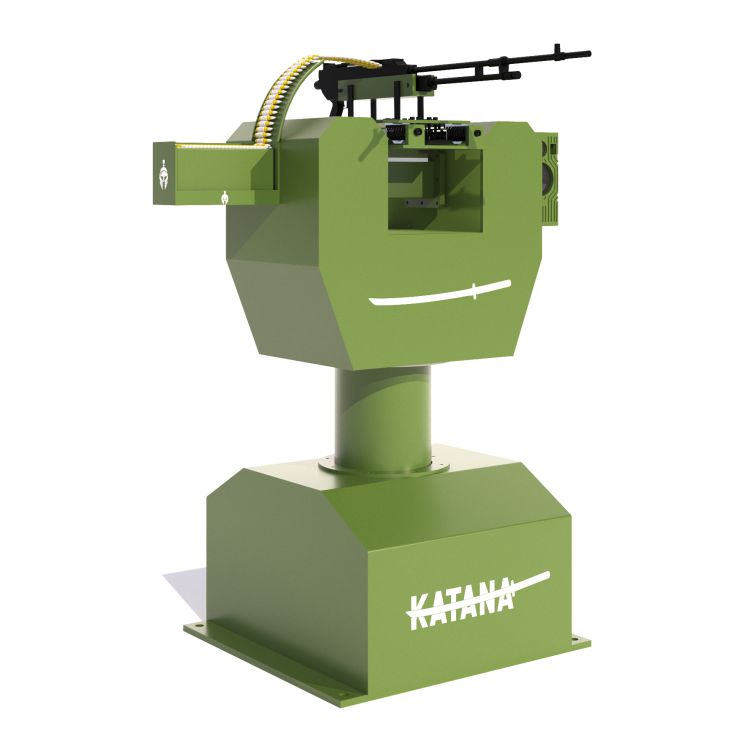
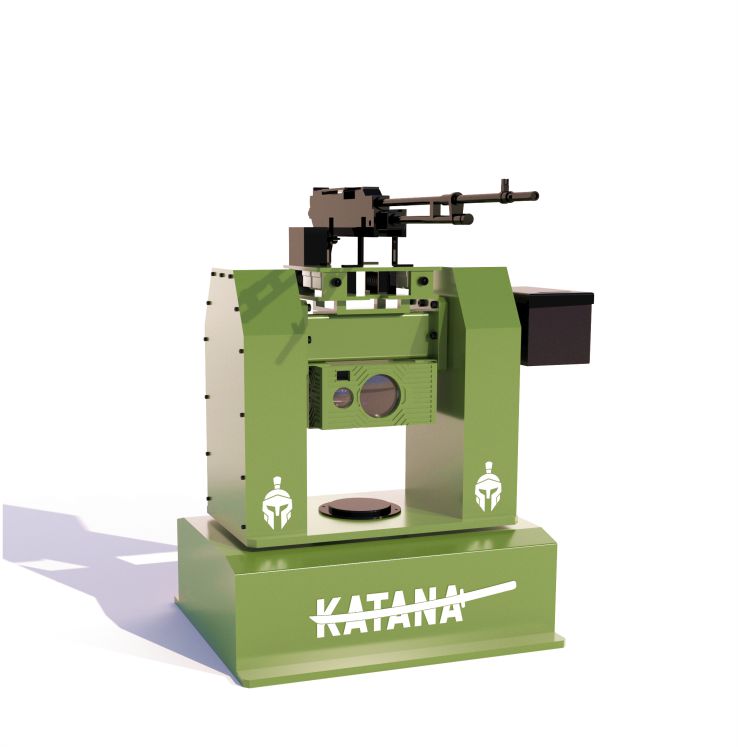
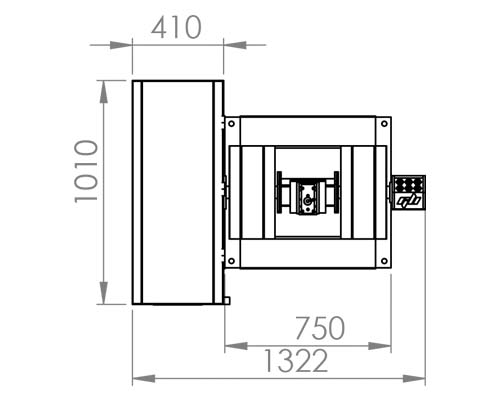
Gridbots KATANA RCWS technical drawing front view — anti drone weapon station
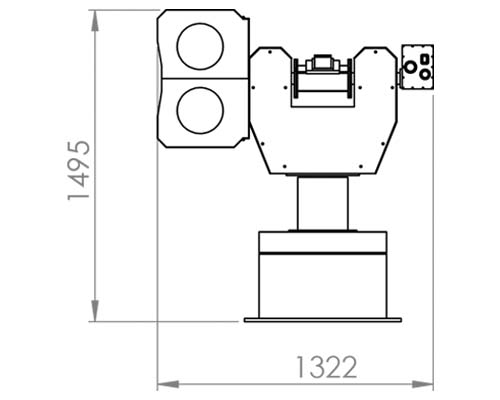
Gridbots KATANA remote control weapon station technical drawing side view
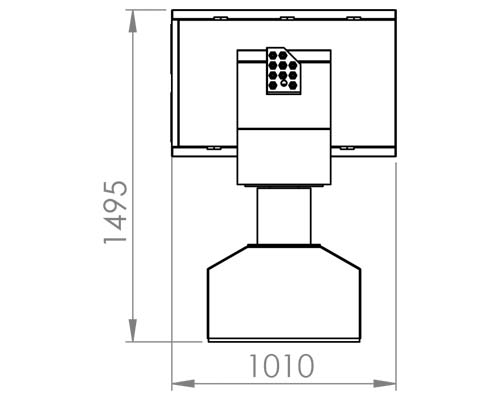
Gridbots KATANA RCWS technical drawing top view — autonomous weapon station


Frequently Asked Questions

KATANA — Ground Defense, Air Defense & SRCG


What is an RCWS (remote control weapon station)?

A remote control weapon station, or RCWS, is a remotely operated weapon mount that lets an operator engage targets from inside a protected vehicle, ship, or fixed bunker. The KATANA RCWS adds AI-enabled autonomous tracking, deep-learning target classification, and a counter-drone hard-kill mode on top of the standard RCWS feature set.

How many versions of the KATANA are available?

The KATANA is offered in three purpose-built versions on a common RCWS chassis: KATANA Ground Defense for bunkers and posts, KATANA Air Defense for anti-drone roles, and KATANA SRCG — a Stabilised Remote Control Gun for naval ships. All three share the same AI compute, sensor backbone and mechanical platform; only the effector pack, fire-control profile and host interface change.

Which KATANA version can fire ATGMs?

ATGM firing is exclusive to the KATANA Ground Defense version. Its integral ATGM launcher (Spike-ER / Konkurs / Nag) gives a static bunker or post a dedicated anti-armour and anti-bunker capability out to 4 km. The Air Defense and SRCG (naval) versions are gun and effector based only and do not carry an ATGM.

Can the KATANA be used as an anti drone weapon station?

Yes. The KATANA Air Defense version (KATANA-AAD) is purpose-built as an anti drone weapon station and integrates with the GB-Sentinel C-UAS suite to provide hard-kill engagement of Class I and Class II UAVs, FPV loitering munitions and low-altitude rotary-wing threats out to 4 km — using 30 mm programmable-airburst rounds and guided micro-effectors rather than an ATGM.

What is the KATANA SRCG?

The KATANA SRCG (Stabilised Remote Control Gun) is the naval version, engineered for OPVs, fast attack craft and ICGS interceptor boats. It is a fully marinised, 3-axis gyro-stabilised remote control gun that auto-locks, tracks and engages fast attack boats (FIAC), suicide skiffs, surface USVs and sea-skimming drones at Sea State 5. As an SRCG it is gun and effector based only — it does not carry an ATGM.

What weapons can the KATANA carry?

The KATANA RCWS supports 7.62 mm and 12.7 mm machine guns, 30 mm and 40 mm grenade launchers, 30 mm programmable-airburst pods, guided micro-effector pods and, on the Ground Defense version only, an ATGM launcher. Effector swap is tool-less and takes under 15 minutes.

How does the KATANA detect drones?

The Air Defense version fuses inputs from AESA radar, RF detection, acoustic Fourier arrays, gated-light cameras and EO/IR (LWIR/MWIR/SWIR) sensors. Sensor fusion is performed on a twin-GPU edge processor running deep-learning classifiers, giving the RCWS a persistent low-altitude track picture out to 10 km.

What is the lock-on time of the KATANA RCWS?

In AI-assisted track mode, the RCWS achieves lock-on in under 1 second across the full UAV velocity envelope. Slew-to-cue handover from external sensors places the threat in the EO/IR field of view in approximately 0.4 seconds.

Is the KATANA Made in India?

Yes. All three versions of the remote control weapon station are designed, developed and manufactured in India by Gridbots Technologies, with indigenous content across the controller, AI engine, sensor pods and mechanical platform — aligning with the Atmanirbhar Bharat and Make-in-India defence procurement priorities.

Can the RCWS be controlled remotely?

Yes. The KATANA RCWS is operated from a behind-armour 10.4" sunlight-readable console with dual-grip joystick. Glass-to-glass video latency is under 80 ms and the link is AES-256 encrypted.

Does the KATANA support autonomous engagement?

The RCWS supports three modes — fully manual, man-in-the-loop, and supervised autonomous track. The autonomous mode is governed by user-defined rules of engagement and IFF / no-fire zone constraints; final fire authority remains with the operator unless explicitly delegated by doctrine.

How is the KATANA protected against EW and cyber attacks?

The remote control weapon station uses AES-256 link encryption with IPSec tunnelling, secure boot, signed firmware, and tamper-detect on access panels. The system is MIL-STD-461G EMI/EMC compliant and survives RF jamming through frequency-agile mesh links and inertial dead-reckoning of the cue.