
A drone has to move air to stay airborne, and moving air makes sound. Gridbots BAT-OMNI turns that physical fact into a sensor. A calibrated 360° microphone array listens to the whole sky at once, and digital beamforming steers hundreds of virtual "listening beams" simultaneously to pick out the rotor and propeller signature of a drone from wind, traffic and background noise.
BAT-OMNI detects small multirotors from 300 metres and larger drones, including engine-powered fixed-wing and loitering munitions, out to 2 kilometres. Because it is entirely passive and works outside the electromagnetic spectrum, it sees what RF sensors cannot: fibre-optic FPVs, autonomous waypoint drones and radio-silent aircraft. It cannot be jammed, and it works the same by day, by night and through smoke or fog.
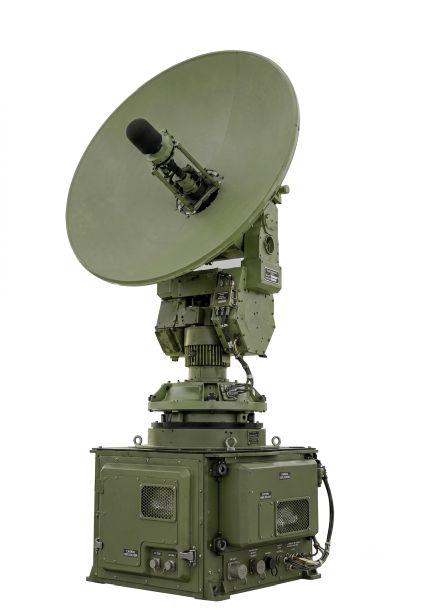
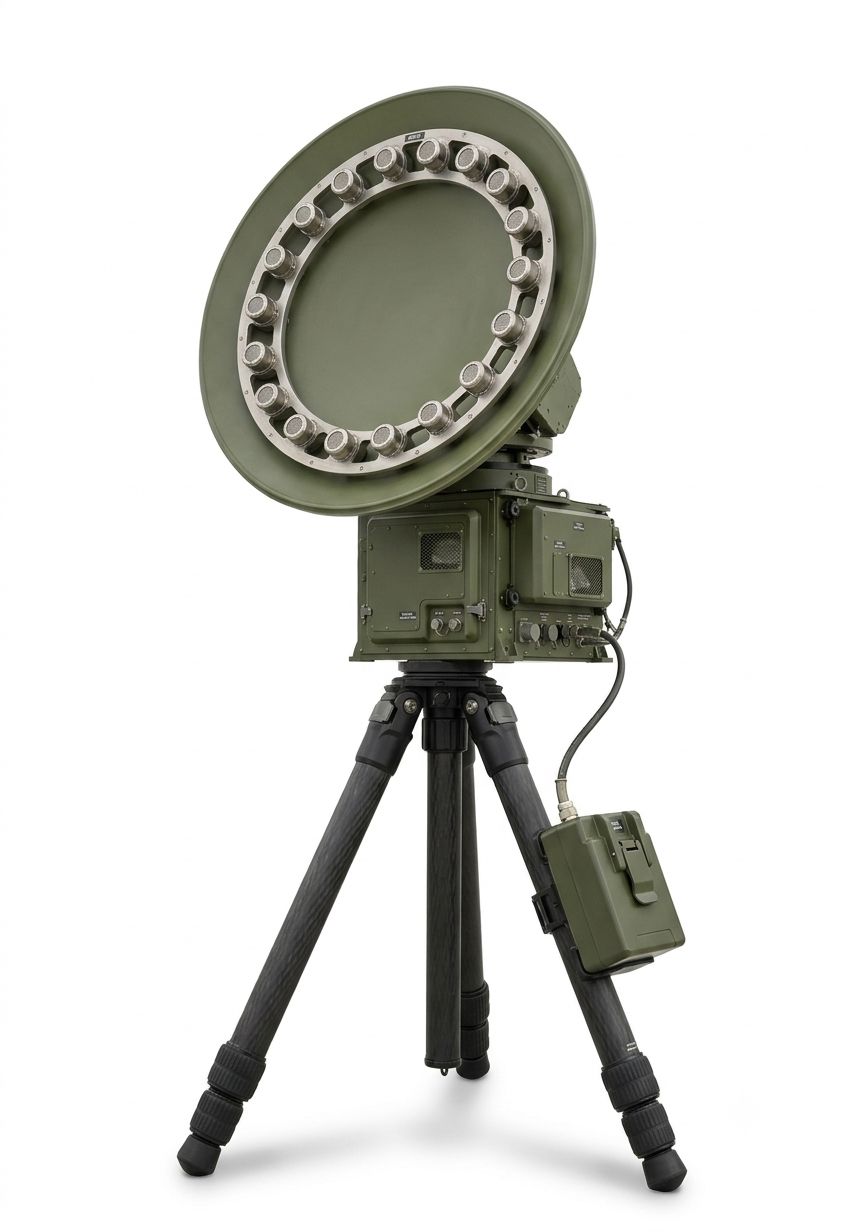
Man-portable array for forward posts, trenches and VIP protection. Tripod mounted with battery power.
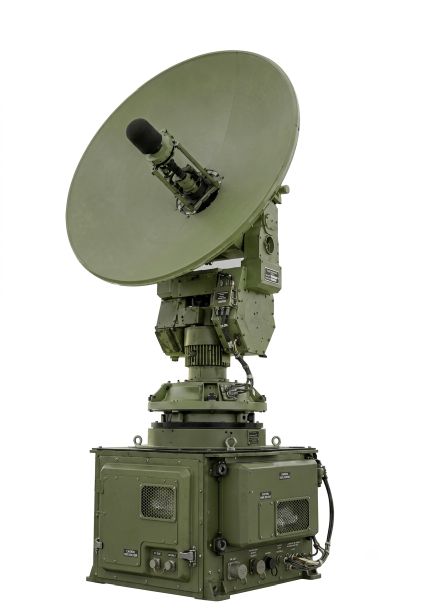
Large-aperture array for bases, airfields and critical infrastructure. Maximum gain and the narrowest beams.
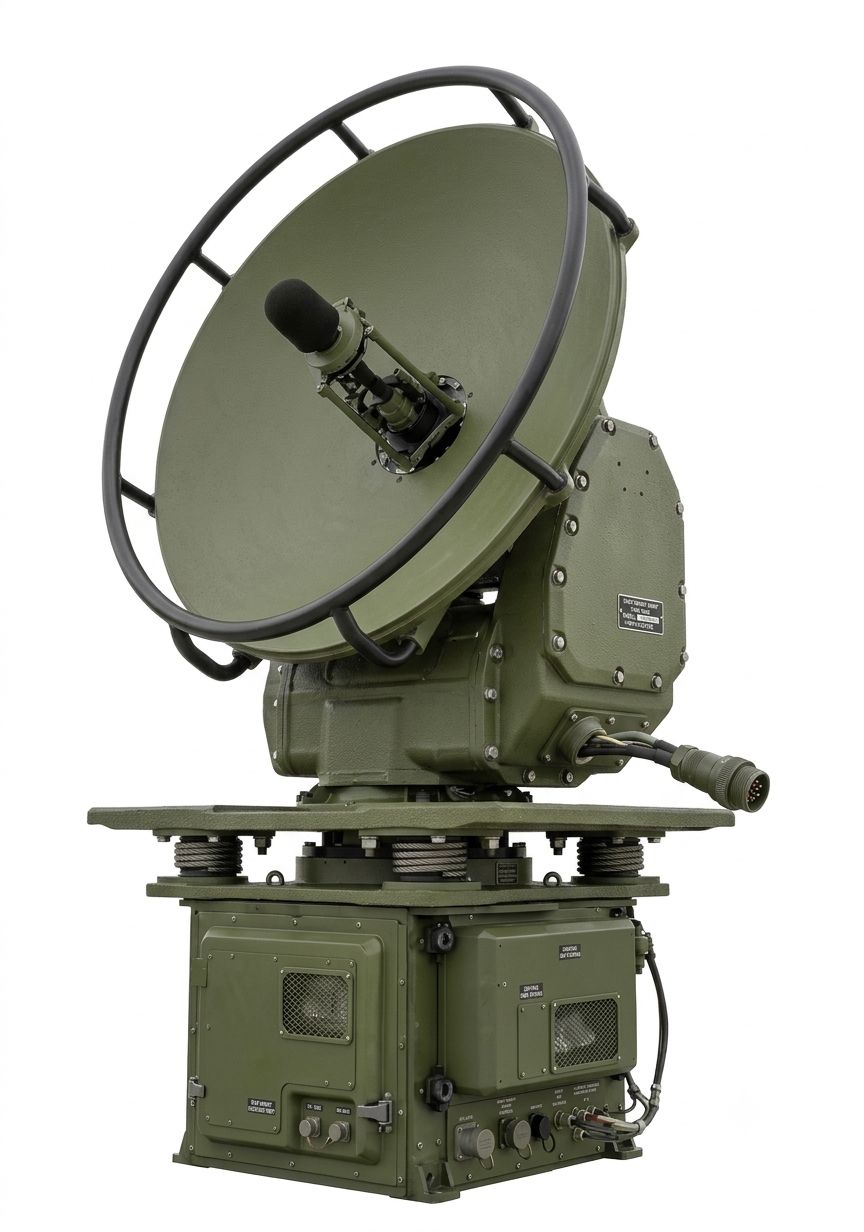
Roof-mounted for convoys and mobile units. Engine and road-noise cancellation for detection at short halts.
Table 01 · Model comparison
| Parameter | BO-C | BO-X | BO-V |
|---|---|---|---|
| Role | Forward post, VIP | Base & infrastructure | Convoy, mobile unit |
| Coverage | 360° az, hemispherical | 360° az, hemispherical | 360° az, hemispherical |
| Small drone (< 2 kg) | 300 m | 500 m | 300 m |
| Large drone / ICE fixed-wing | 1.2 km | 2 km | 1.2 km |
| Array aperture | Compact | Large | Compact, ruggedised |
| Position fix | Bearing + elevation | Multi-node triangulation | Bearing + elevation |
| Power | Internal battery | 24 VDC / PoE++ | 12 / 24 VDC vehicle |
| Typical mounting | Tripod | Mast / rooftop | Vehicle roof |
The array hears every direction at once. No rotation, no scanning gaps, no blind sectors.
Hundreds of simultaneous steered beams raise the drone above ambient noise and give azimuth and elevation directly.
Real-time spectral analysis isolates the blade-pass frequency and its harmonics, the fingerprint of every propeller.
Low-frequency pressure fluctuations from rotor wash and engines extend detection of larger, heavier aircraft.
Separates multirotor, FPV, fixed-wing electric and engine-driven aircraft from birds, vehicles and generators.
Holds several drones on separate bearings at the same time, each with its own track and classification.
Wind-noise screening and learned background profiles keep false alarms low on busy sites.
Networked arrays triangulate bearings into a 3D position plotted on the map.
Acoustic sensing is outside the electromagnetic spectrum. No EW technique degrades it.
Detects fibre-optic FPV, autonomous and waypoint drones that RF sensors cannot register.
Performance is unaffected by darkness, glare, smoke, dust or fog.
Operators can listen to any steered beam to confirm a contact by ear.
Each microphone in the BAT-OMNI array hears the drone a fraction of a millisecond earlier or later than its neighbours, depending on where the sound comes from. Beamforming applies the matching time delays across the array and sums the channels, so sound from one direction adds up while noise from every other direction cancels. Steering many beams at once covers the full sphere continuously.
Inside every beam, real-time sound analysis looks for the blade-pass frequency and its harmonic series, the tonal signature that propellers and rotors cannot hide. A parallel pressure-wave channel analyses the low-frequency pressure fluctuations produced by rotor wash and engines, which travel further and help detect larger aircraft at long range.
BAT-OMNI is derived from the field-proven Gridbots BAT acoustic gunshot locator family, re-tuned from supersonic muzzle events to the rotor and engine domain.
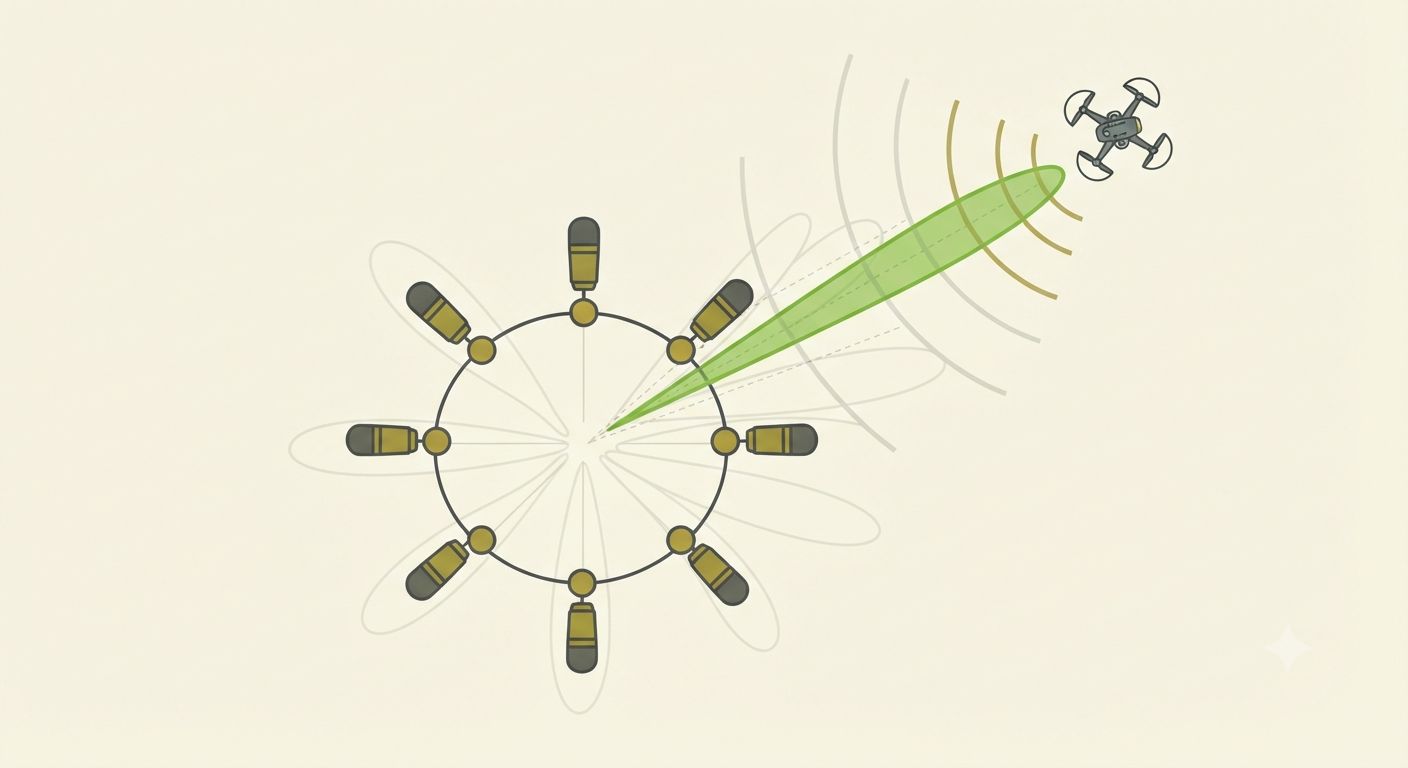
Fig. 01 · Acoustic processing chain
Synchronous sampling of every microphone in the array.
Simultaneous steered beams across 360° azimuth and elevation.
Harmonic and pressure-wave analysis inside each beam.
AI model labels drone type and rejects non-threats.
Bearing, elevation and alert sent to operator and effectors.
Acoustic detection range grows with the size, power and loudness of the aircraft. Small, quiet multirotors are detected from 300 metres; larger multirotors, fixed-wing aircraft and engine-driven drones are detected out to 2 kilometres. Figures are typical for the BO-X array in moderate ambient noise and light wind.
Fig. 02 · Typical detection range (m) · BO-X
Table 02 · Performance by drone class and model
| Drone class | BO-C | BO-X | BO-V (at halt) | Classification |
|---|---|---|---|---|
| Micro / mini quad< 2 kg | 300 m | 500 m | 300 m | ✓ |
| FPV attack droneincl. fibre-optic FPV | 400 m | 600 m | 400 m | ✓ |
| Small multirotor2–7 kg | 500 m | 800 m | 500 m | ✓ |
| Medium multirotor7–25 kg | 800 m | 1.2 km | 800 m | ✓ |
| Engine-driven / largeICE fixed-wing, loitering munition | 1.2 km | 2 km | 1.2 km | ✓ |
Range varies with wind, terrain, temperature gradients and ambient noise. For the full kill chain, BAT-OMNI is fused with TeraWave RF and Sleuthound optical sensors inside the Gridbots Sentinel layered system.
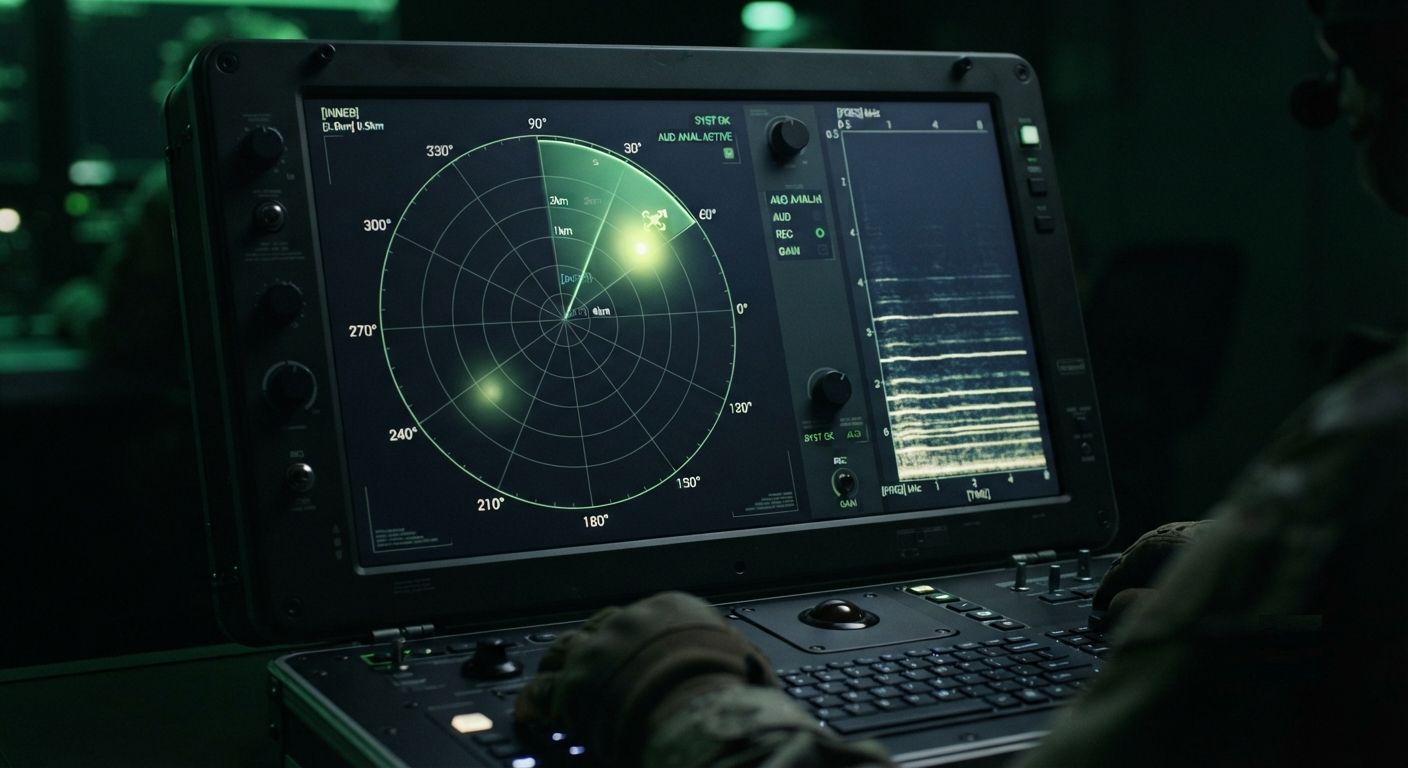
Fig. 03 · 360° beam map / acoustic heat map
| Condition | RF sensor | Optical / IR | Radar | BAT-OMNI |
|---|---|---|---|---|
| Fibre-optic / radio-silent drone | ✗ | ✓ | ✓ | ✓ |
| Night, smoke, fog | ✓ | Partial | ✓ | ✓ |
| Electronic jamming | Degraded | ✓ | Degraded | ✓ |
| Low altitude / terrain masking | Partial | Partial | ✗ | ✓ |
| Emits nothing (covert) | ✓ | ✓ | ✗ | ✓ |
BAT-OMNI runs as a self-contained detector with its own operator display and audible alerts, or as the acoustic node of a larger counter-UAS network. Tracks are published over Ethernet to C2 systems, VMS platforms, optical trackers, jammers and the Gridbots Sentinel fusion core.
| Output / Interface | Description |
|---|---|
| Azimuth & elevation | Real-time 3D bearing for each tracked drone |
| Geolocation | Lat / long / altitude fix from two or more networked arrays |
| Classification | Drone type, confidence and harmonic signature data |
| Alerts | On-screen, audible, dry-contact and network alarms by zone |
| Slew-to-cue | Bearing hand-off to EO/IR trackers, jammers and RCWS (e.g. KATANA) |
| Audio | Listen-in on any steered beam; event audio recording |
| Operator display | 360° beam map, spectrogram, track list and map view |
| Link | Gigabit Ethernet, documented JSON / UDP API, optional radio link |
| General | |
| Model numbers | BO-C · BO-X · BO-V |
| Type | Passive 360° acoustic drone detection and direction finding system |
| Targets | Multirotor, FPV, fixed-wing electric and engine-driven drones |
| Acoustic Performance | |
| Coverage | 360° azimuth, hemispherical elevation |
| Detection range | 300 m (small drones) to 2 km (large / engine-driven drones) |
| Sensor | Calibrated multi-element microphone array, synchronous sampling |
| Processing | Digital beamforming, multiple simultaneous steered beams |
| Analysis | Real-time harmonic (blade-pass) and low-frequency pressure-wave analysis |
| Bearing accuracy | ≤ 3° azimuth typical (BO-X) |
| Simultaneous tracks | Multiple targets on independent bearings |
| Classification | AI-based; drone type vs. birds, vehicles, generators |
| EW vulnerability | None — non-electromagnetic, fully passive |
| Physical & Environmental | |
| Weight | [To be confirmed per model] |
| Dimensions | [To be confirmed per model] |
| Power | Internal battery (BO-C) · 24 VDC / PoE++ (BO-X) · 12/24 VDC (BO-V) |
| Interface | Gigabit Ethernet, JSON / UDP API, dry-contact alarm |
| Positioning | Integrated GNSS and digital compass |
| Wind protection | Acoustic wind screens on every element, wind-noise rejection |
| Ingress protection | IP66 |
| Operating temperature | −20 °C to +55 °C |
| Standards | MIL-STD-810 environmental, MIL-STD-461 EMI / EMC design practice |
Specifications are typical and subject to configuration and site conditions. Detailed performance figures are released to qualified government and defence procurement authorities on request.


Standards & Certification
Fully Passive Unjammable MIL-STD Vibration & Shock IP66 Sealed Wide-Temperature Operation Make in IndiaRequest a technical briefing, a live field demonstration or a site acoustic survey with Gridbots BAT-OMNI.
GET A QUOTE CONTACT US
Gridbots Technologies Pvt. Ltd. · Ahmedabad, Gujarat, India
+91-9924826584 · contact@gridbots.com
Gridbots BAT-OMNI is a 360 degree acoustic drone detection system made in India. Using a calibrated microphone array, digital beamforming and real-time sound and pressure-wave analysis, BAT-OMNI detects small drones from 300 metres and large or engine-driven drones up to 2 kilometres. It is fully passive and unjammable, and detects fibre-optic FPV, autonomous and radio-silent drones that RF detectors miss. BAT-OMNI protects military bases, forward posts, airports, prisons, power plants and convoys, either standalone or as the acoustic layer of the Gridbots Sentinel anti drone system.